
2026 has been an incredibly active year for heavy storm surges, and September through December are still ahead. The state of Illinois has surpassed record tornado activity, with over 200 tornadoes confirmed as of August, more than tripling the annual average of 66 and easily surpassing the previous annual record of 142 set in 2024. 2026 is the third year in a row when over 100 tornadoes have been confirmed in the state, following 2024 and 2025.
The Alphawood Arboretum and Illinois Tech campus have not escaped this surge of storm events. The first massive storm event touched campus on June 10th. This storm was classified as a derecho. Wind speeds topped 80 MPH consistently across a storm front over 250 miles long! This first storm was the most destructive, causing canopy damage in trees across campus and even outright knocking some trees down. Over a dozen trees failed completely or were so severely damaged that they needed to be fully removed. The very next day, June 11, a second storm caused compounded damage on campus.
Cleanup operations began immediately and are ongoing. Failed trees were removed, and damaged limbs needed to be carefully pruned out of surviving canopies. No space on campus was left unaffected, and damage becomes more obvious as time elapses following the storms. After removing damaged limbs from an area, branches that were weakened continue to fail and need to be addressed yet again. It is a time-consuming process, but the safety of our students and arboretum visitors is always the highest priority.
Storm damage didn’t end in June. A series of additional weather events followed through July and into August. A second derecho occurred in August, and numerous smaller events brought flash floods and strong winds. Some photos of the damage highlight how destructive the summer storms have been.
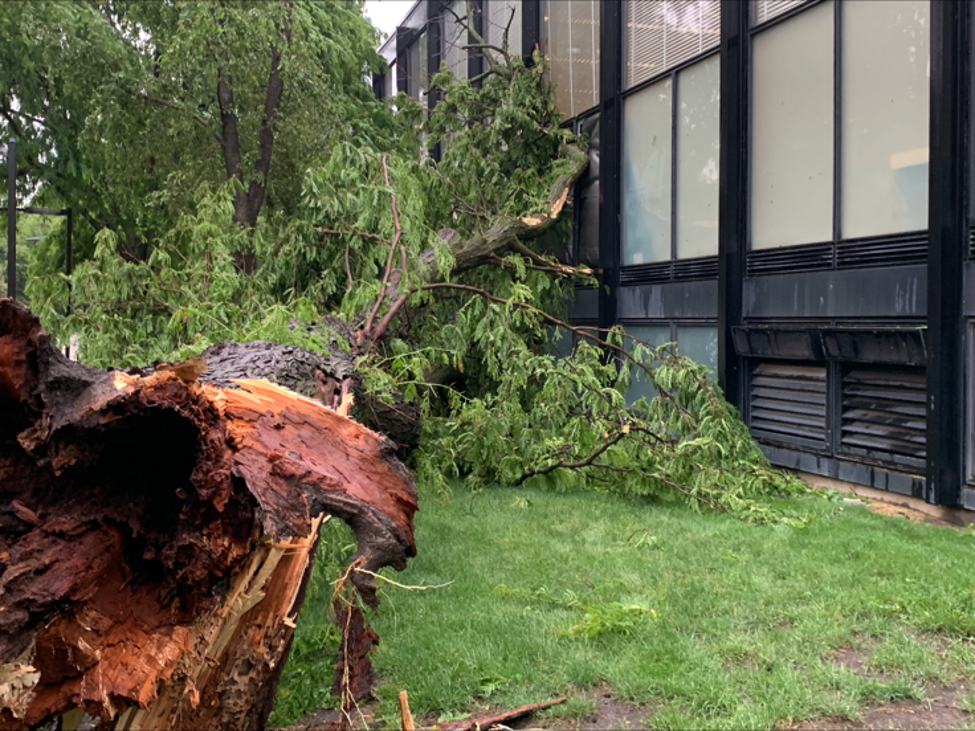
June 10, the locust tree completely failed at the base, falling towards Crown Hall.
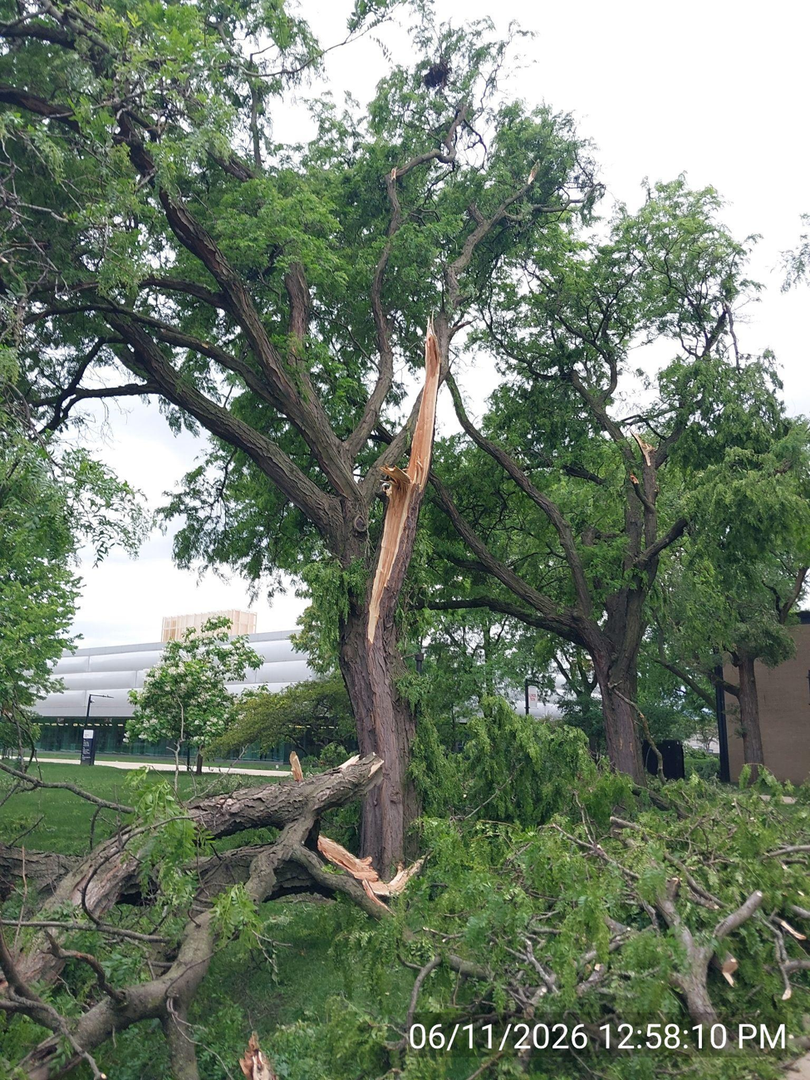
Extensive damage in numerous trees west of John T. Rettaliata Engineering building
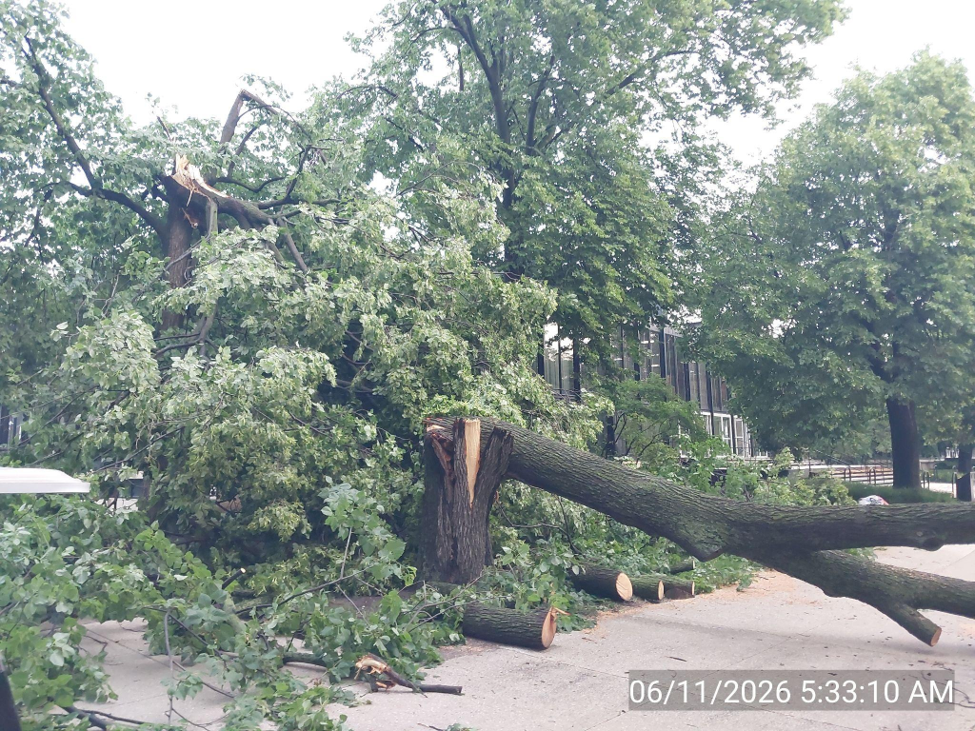
Failed linden trees in the process of removal at Herman Hall/33rd Street Prairie.
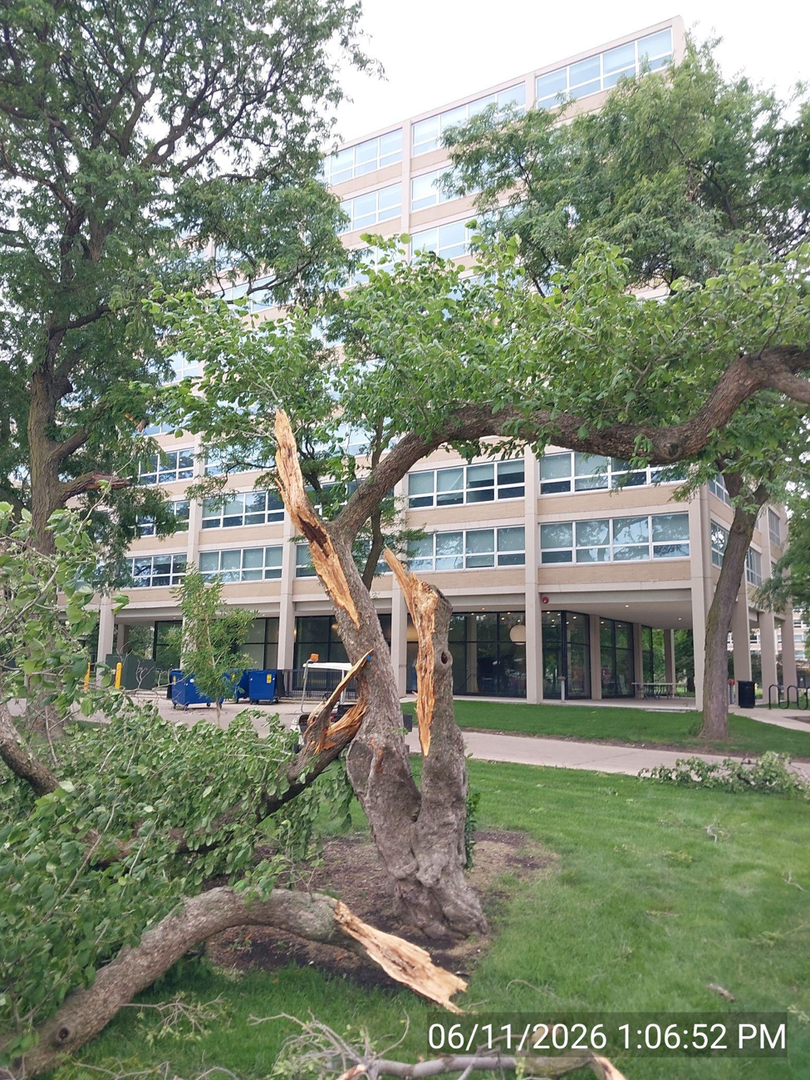
Hawthorn completely failed north of Kacek.
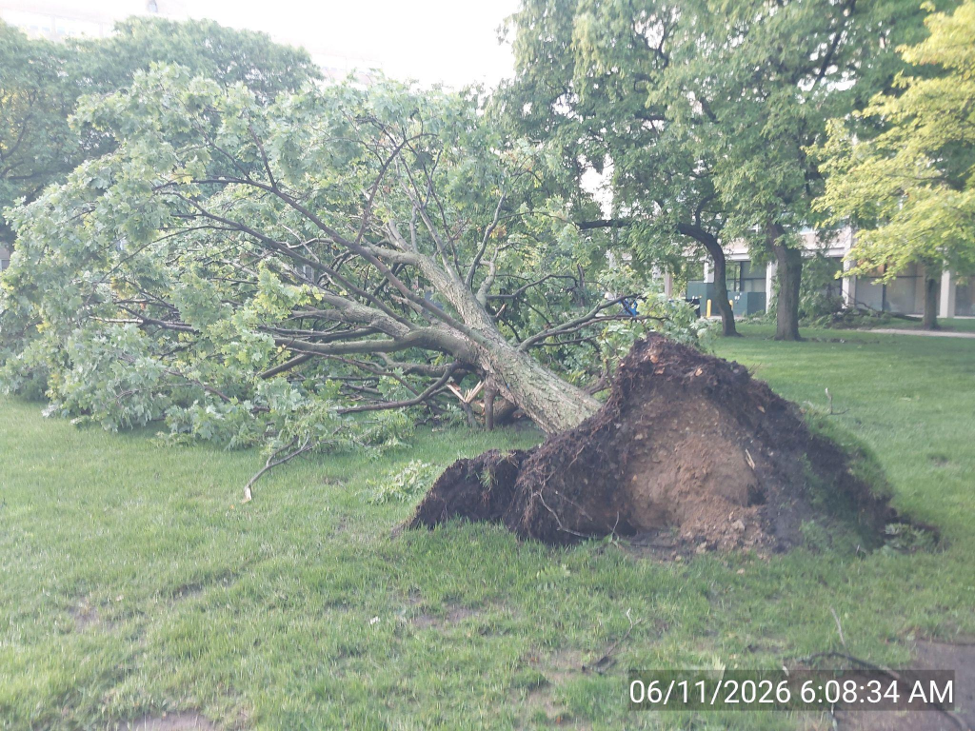
The sugar maple tree, knocked on its side east of the tennis courts.
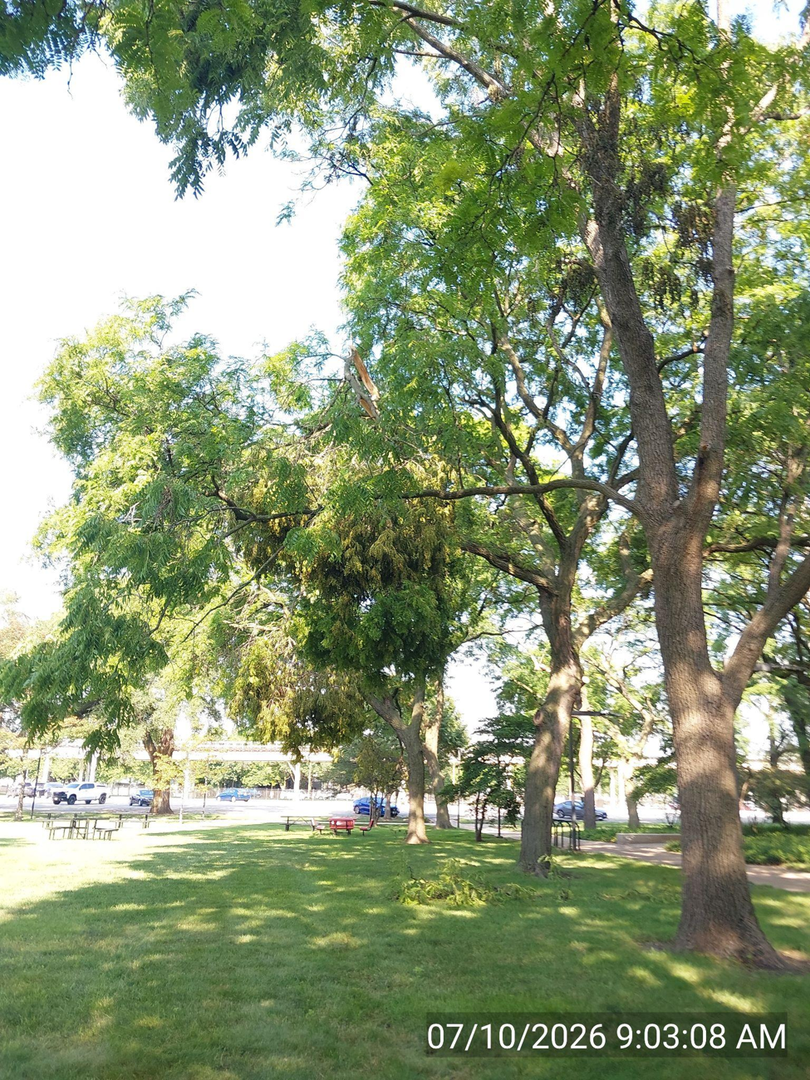
Additional branches fail in July storms.
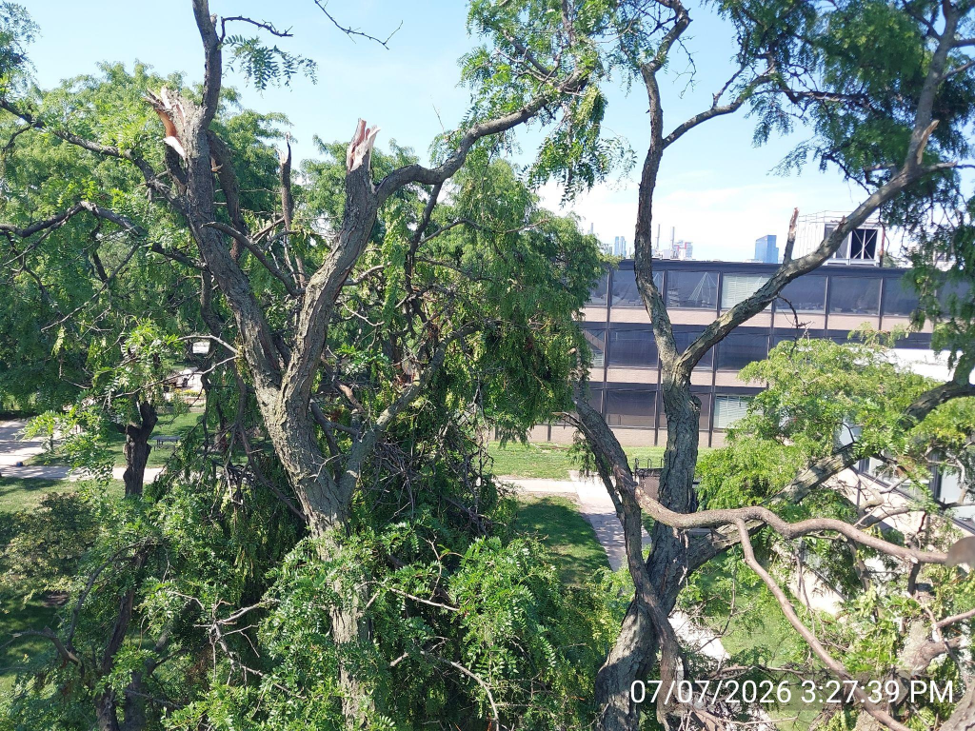
The view from up inside the canopy following more July storms.
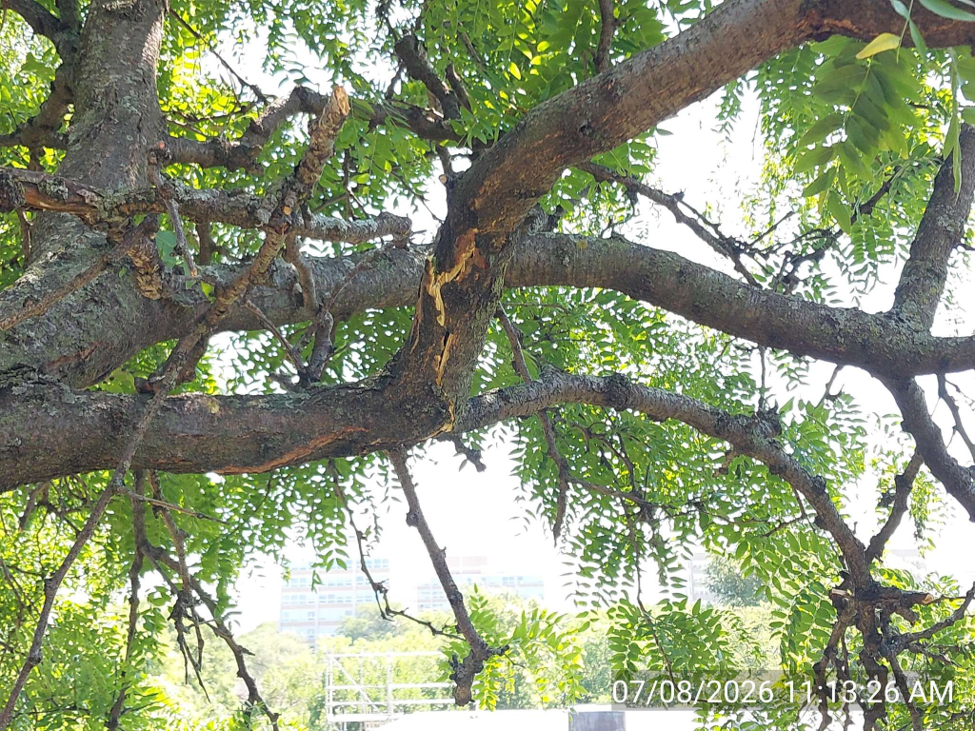
Some limbs didn’t fail outright, but were severely weakened and needed to be removed.
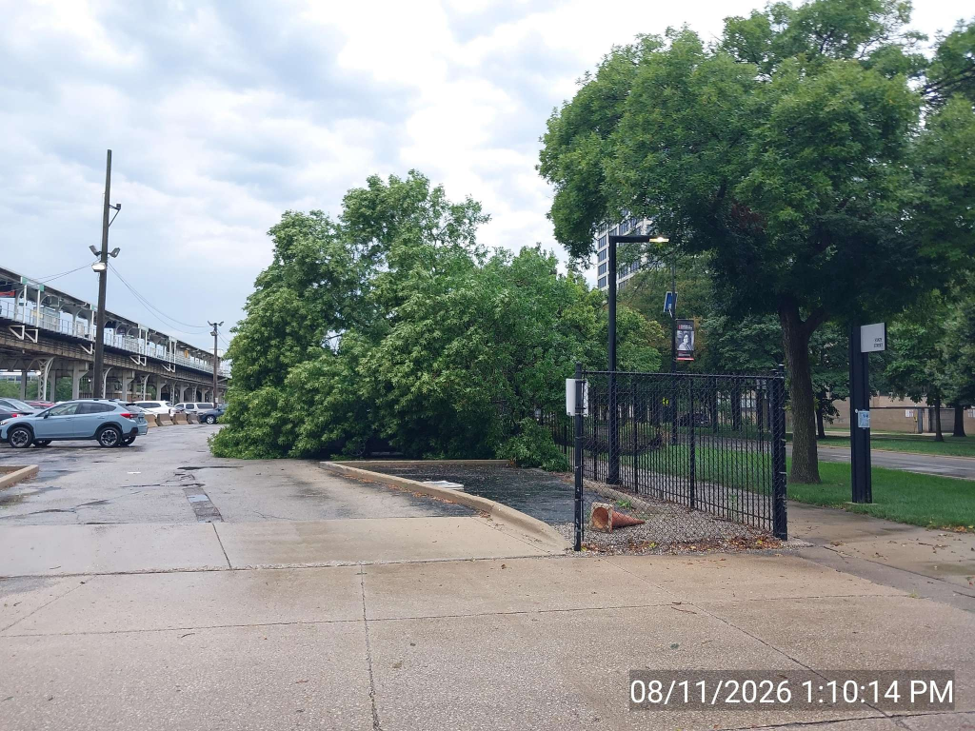
An ash tree that failed during the second derecho storm on August 11.
What will future weather patterns look like? As the climate warms, more heat energy is being dumped into oceans, ground temperatures, and the atmosphere. This additional heat creates more capacity for water vapor to accumulate in the air and create stronger storm events, which produce much greater deluges of precipitation. The intensification is likely to escalate throughout the remainder of 2026 and into 2027, when the current El Niño system will take form and begin creating more severe storms for the next calendar year. The climate of Illinois is expected to become wetter and warmer, with milder winters and more precipitation through spring.
The past 5 years have given us prominent late-summer drought conditions and mild winters. This trend has been very harmful to our native oak trees in particular, which cannot cope with additional spring moisture and late-season drought. Expect to see these weather events continue through next spring and summer at the least, with the overall trend continuing after the end of this current El Niño system. As engineers and civil planners, the future of our cities and landscapes will need to accommodate harsher winds and more water than ever before. The shape of our urban canopy will be changing as well, as more and more trees will be damaged or lost before reaching maturity.
Additional information about the summer storm season can be found at the NOAA website: https://www.weather.gov/lot/2026_06_10_Derecho https://www.weather.gov/lot/events
Illinois State Climatologist blog and drought monitor: https://stateclimatologist.isws.illinois.edu/